
I wrote this early September of 2018 so I could document my thoughts and predictions. I want to reflect back on this in the coming years to see how much of this may come true.
There is mounting evidence there will soon be another leap in technology. In the high speed Internet service arena. Wireless rather than wired. Will the dominant providers emerge in the form of a cellular signal, or a grid of orbiting satellites? Or will the final outcome be a merger of the two?
This change may make the morph from pony express rider, to telegraph, on through to telephone service….. seem insignificant.
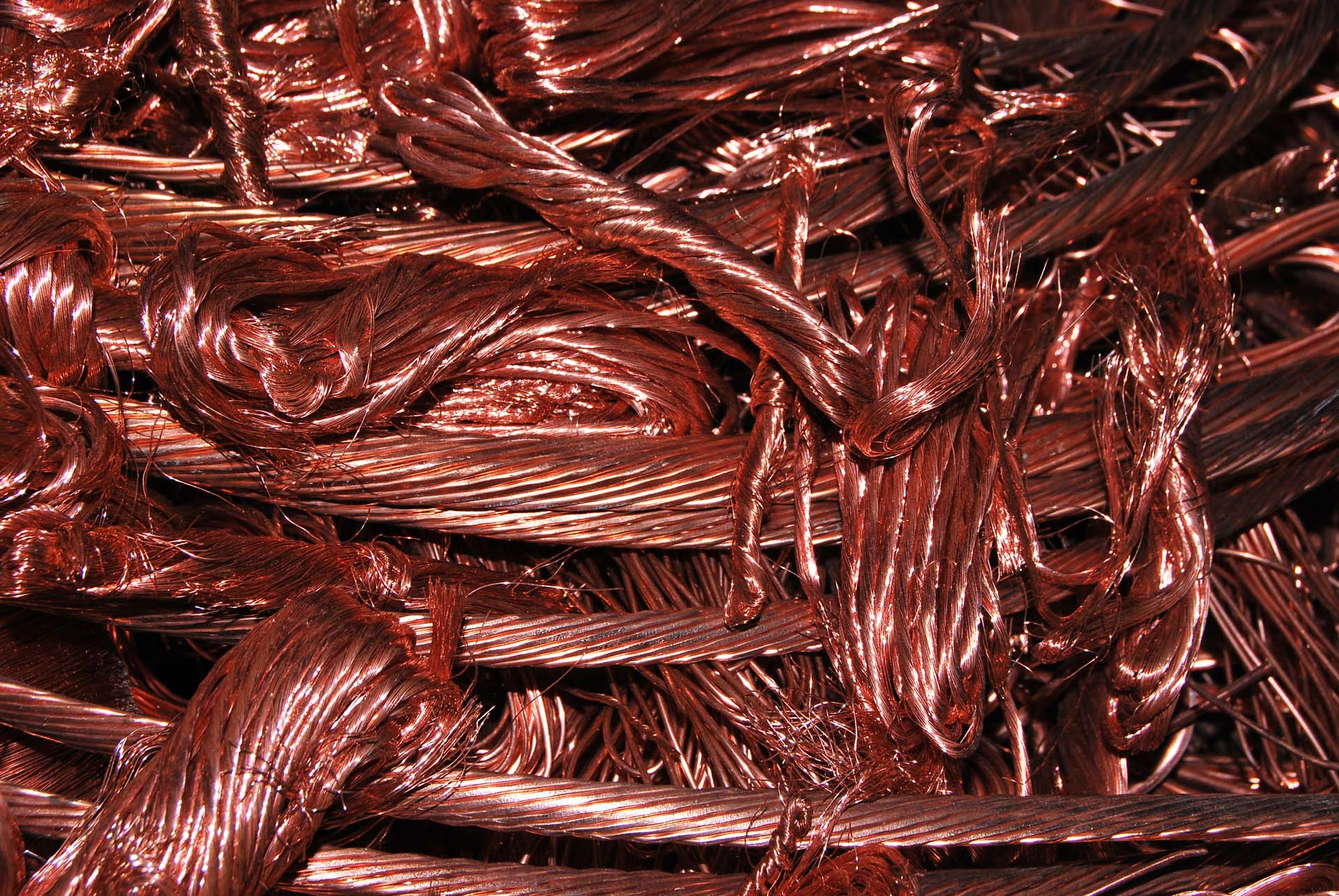
A death blow appears to be coming to telecommunication services still delivered on copper based cable facilities. A carryover service based on both telegraph and land line telephone technology. Service Providers that failed to anticipate the future, or do not quickly adapt, may not remain standing in the game. At least they will look nothing like they do today.
The battle to serve the end user customer has been in the works for some time. Technology, costs, and the demand for higher Internet data speeds, are driving the latest change. I believe we are on the brink of wireless data, for all of our telecommunication requirements.
The battle in the near future will be the end-user delivery system. Beyond that I believe wireless will even start eroding high capacity fiber transport.
Reliable connection sources, and recent innovations, seem to indicate higher speed cellular such as 5G, 6G, or whatever future generation it morphs too. Or perhaps a more futuristic delivery system in the form of satellites. Both of which are in development already.
It is a predictable battlefield. Much like the cellular verses land line war started. Today’s battle that is ramping up is; Wireless Internet, verses a Hard-Wired Internet. A race to get wireless high speed internet up and running for the masses. Start capturing customers and that revenue stream, to fund technology replacement, and create protocols, before competitors attempt to join the game.
This may be similar to what occurred about 40 years ago. When cell phone service started to emerge. Crazy to think the land line service providers back then were just emerging from party line service, and converting from rotary dials to digital keypads.
The war between Cellular verses Land Line has been raging on ever since. The copper land line and related services is nearing extinction. There was plenty of naysayers that scoffed and said cellular service was never going to fly. Even some of the major telecommunication providers of the time made serious blunders in foreseeing the future. Some even waffling back and forth. Buying and selling their wireless spectrum. Ending up with no way to provide wireless services.
Many end user customers, both business and residential, have changed their service from copper fed, to be fed over fiber facilities. To obtain a higher speed available from the internet. With that came cutting the cord on copper land line telephone service. This has even impacted advanced services also transported over copper in the form of T1 service and more.
End-Users Integrating their high speed internet with VOIP [Voice Over Internet Protocol]. All of which moved them off traditional telco switching, and onto VOIP switches too.
Most of the younger generation do not have a clue as to what “dial-up” was. It wasn’t that long ago!
Is traditional telco switching also to become a dinosaur too? Lots of evidence for that too. Why let the conversion requirements between the two, hang around in the day and age of packet technology and VOIP?
Delivery services, the transport for the end user, in general are on the brink of morphing. There are many indicators that prove it has already started.
The first to experience the inevitable most likely will be Providers and customers still depending on services provided via copper based facilities. Services such as land line dial tone, copper based Internet in the form of DSL, including perhaps the Telco Central Office switching equipment and traditional Telco networks?
Customers still serviced by these types of copper based facilities will be the ones that will most likely experience an abrupt change first.
Some of the major service providers have already petitioned State and Local governments to abandoned copper facilities. Some have secured approvals.
There are sure to be similar requests in the pipeline, and by multiple providers. In the near future, it wouldn’t be hard to imagine, end user copper customers being issued a notice to secure their service through a different provider. Or over a different form of transport.
The boundaries of the providers that were once the LEC [Local Exchange Carriers], were boundary’s that were spelled out in the mid 1980’s. Deregulation at both Federal, State, and Local levels drastically altered the telco’s at that time. These boundary’s, rules and regulations have all become convoluted and blurred. With providers once considered CLEC’s [Competitive Local Exchange Carriers] such as Cable TV Service Providers, becominge more like a traditional LEC.
Many of these CLEC providers may well be serving more dial tone customers via VOIP than the traditional phone company serving the same area. Many other voice customers have made cellular their only provider. This further eroded the LEC customer base and revenue stream. The money is not there to expand or maintain the copper going to a shrinking customer base.
Copper based service cost, to the customer served ratio, has been tipping toward the negative ever since cellular started. The demand for wireless, and the willingness by the bulk of the population, to pay for high Internet data speeds, has dropped a large weight on the negative end of that copper based scale.
Unfortunately some of the decision makers of these copper transport companies, didn’t invest in facilities that are capable of delivering services at higher speeds. Not at the speeds the end users are demanding and willing to pay for.
Investors will be shifting to the Providers offering viable alternatives to copper. Copper providers have no choice but to cut and run unless there is some technology breakthrough for copper. How do companies stuck in this quandary replace their copper transport.? A massive project that would take lots of capital investment. While their customers are flocking to other providers offering larger bandwidth?
Copper providers are hindered with Federal, State, and Local government regulations, laws, and franchises language. They appear to be the most cumbersome entity that needs to remove huddles. I see governmental restrictions removed to allow these companies to abandoned their copper based services. Once that happens there will be an acceleration to this morphing.
Some traditional copper providers may survive as high bandwidth transport providers. That’s if they have enough fiber in place to link wireless nodes or other high capacity Internet nodes, or other high bandwidth services. It is doubtful they will survive in the end user residential market. That portion of the business once referred to as the “last mile”.
Will Wireless high bandwidth transport replace fiber in the distant future? Even fibers used for high capacity transport? That could be another short lived technology. History would indicate technology will not remain static. Fiber may even be approaching the autumn of its life, especially fiber facilities serving those ‘last mile’ end user customers.
Much of the timeline in all of this is hindered by technical integration, providing 911 service, and providing services in area’s that that have sparse customer density.
Higher customer density area’s will be the first indicator’s. At the same time foreword thinking companies will reveal themselves as the next powerhouse telecommunication providers that will survive and usher in the next wave of technology upgrades.
